Serving Petaluma, CA and surrounding areas. (707) 222-6844
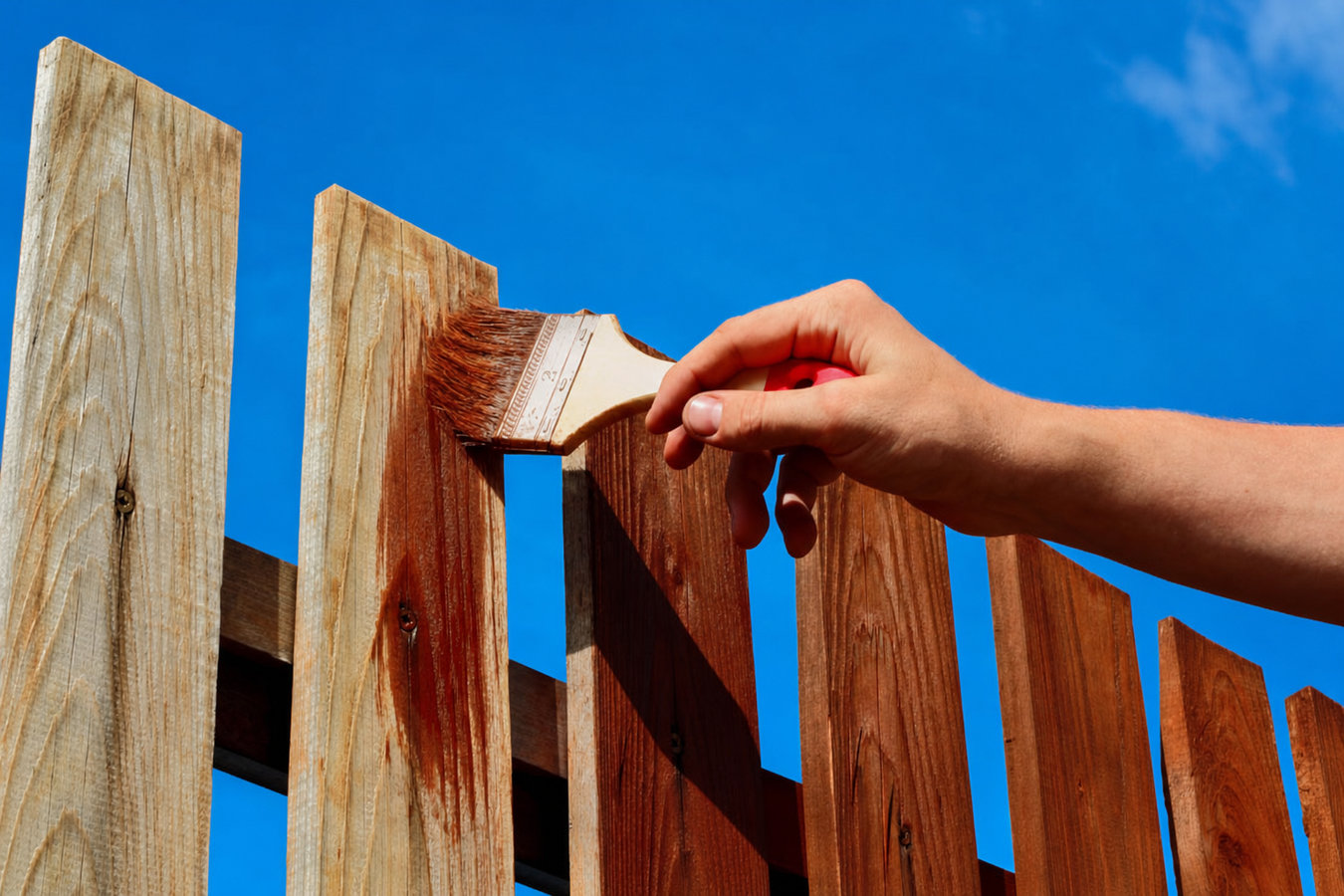
Your wood fence takes a beating from Petaluma's wet winters and foggy summers. The right stain and seal job, done correctly, keeps it solid and looking good for years - not months.
Fence staining and sealing in Petaluma protects wood from moisture, UV damage, and mold growth, and most residential jobs take one to two days depending on fence length and prep condition.
Petaluma's coastal valley climate runs wet from November through March, then bone dry and sun-heavy through summer. That cycle is hard on unprotected wood. Without a proper stain and seal, moisture soaks in during winter, the wood swells, and then it dries and cracks in summer - repeating every year until the fence starts to fail. If your fence is already showing wear, a fence repair before the staining ensures any soft or damaged boards are handled first rather than sealed over.
The right time to act is before visible damage sets in. A fence that looks faded but feels solid can be brought back to life with the right prep and product. Waiting until boards are rotting means a bigger investment, and potentially a full fence replacement instead of a straightforward staining job.
When wood loses its protective coating it oxidizes and turns that familiar weathered gray. In Petaluma's foggy, UV-heavy summers this process happens faster than most homeowners expect - sometimes within two to three years of the last treatment. If the surface feels rough or splintery when you run your hand along it, the wood needs attention.
Splash a little water on your fence boards. If it soaks in and darkens the wood immediately, the sealer has worn off. If it beads up and rolls off, you still have protection. Petaluma's rainy winters - typically November through March - are when an unprotected fence takes the most damage, so running this test in early fall gives you time to act.
Dark staining, green fuzz, or a slick surface is mold and mildew growth - a direct result of moisture sitting in unprotected wood. Petaluma's morning fog creates ideal conditions for this, especially on the north-facing side of a fence that does not get much afternoon sun. Mold accelerates wood decay, and the longer it sits the more boards you will eventually need to replace.
If you can see the old finish lifting off the wood in flakes or curling strips, it is no longer protecting anything - it is trapping moisture underneath. This is especially common on fences that were painted rather than stained, or where product was applied over an improperly cleaned surface. The fence needs to be stripped and prepped before anything new goes on.
Every fence staining job starts with an honest assessment. We walk the fence with you, note which boards need replacing, and choose a product suited to your specific wood. Older Petaluma neighborhoods have a lot of redwood fences, and redwood is particular - we test a small section first rather than assuming one product works for all wood types. If your fence has boards that should come out before staining, we flag that upfront so the finished job actually holds.
Our staining work pairs naturally with other services we offer. If your fence has structural damage alongside surface wear, we handle fence repair alongside the staining so you get one crew and one visit rather than coordinating multiple contractors. And when a fence is too far gone to save, we can assess whether fence replacement is the more cost-effective path - including which material holds up best in Petaluma's climate.
Suits homeowners who want color and protection while keeping the natural wood grain visible - the most popular option for redwood and cedar fences.
Suits homeowners who want a uniform finish that hides weathered or mismatched boards - note that some HOA guidelines restrict solid colors, so check your CC&Rs first.
Suits homeowners who want moisture protection without changing the fence's appearance - ideal for newer fences that have not yet started to weather.
Suits homeowners whose fences have a mix of sound and damaged boards - we replace what needs replacing first so the stain job holds for the full two to four years.
Petaluma sits in a coastal valley that pulls in cool, damp air from the Pacific through the Petaluma Gap. The city gets more morning fog and ambient humidity than inland Sonoma County towns - and that moisture finds its way into every crack and grain of unprotected wood. For fence staining, this matters because the wood needs to be genuinely dry before any product goes on, and that window is narrower here than in drier parts of California. Late spring through early fall is the reliable scheduling window, and we plan jobs around it. Homeowners in Penngrove deal with the same fog conditions, and we schedule their staining work with the same weather awareness.
Petaluma's housing stock also shapes how this service works. Many homes built between the 1950s and 1980s have original or early-replacement redwood fences - beautiful wood, but one that can reject certain oil-based products if it has been weathering for years without treatment. We choose products that actually bond to aged redwood rather than whatever happens to be on the truck. Homeowners in Rohnert Park often have newer cedar or pine fences that call for a different approach, and we adjust our product selection and prep method accordingly. The right fence care varies by wood type, neighborhood, and climate exposure - and that is something a contractor with genuine local experience can actually account for.
For more on wood preservation and sealer standards, see the U.S. Forest Service Forest Products Laboratory and the EPA Safer Choice program.
Contact us by phone or through the estimate form and we will get back to you within one business day. We will ask about your fence's length, height, material, and condition - often with a few photos - before scheduling a quick in-person walk to confirm the scope and give you a written price that spells out prep, materials, and labor separately.
Fence staining in Petaluma is weather-dependent - we schedule during dry stretches when no rain is forecast for at least 48 hours after the final coat. Most jobs happen between May and October. Booking in August or September gives you the best flexibility before Petaluma's rainy season arrives.
The crew cleans the fence first - removing dirt, mold, and old product - then lets the wood dry fully, typically 24 to 48 hours. Any boards that need replacing happen at this stage. Do not be surprised if the prep day and staining day are scheduled separately - that is a sign the job is being done correctly.
Once the fence is clean and dry, we apply the stain in one or two coats with drying time between them. After the final coat, the fence needs 24 to 48 hours to cure before it should get wet. We walk through the finished job with you and tell you when to plan the next treatment - usually two to four years out.
No pressure, no obligation. We will walk your fence, give you an honest assessment, and provide a written estimate - usually within one business day.
(707) 222-6844We walk the fence with you and tell you exactly which boards need replacing and which ones are fine - so you make decisions based on facts rather than a sales pitch. Staining over boards that need replacement wastes money and shortens the life of the job.
Older Petaluma fences are often redwood - a wood that can reject certain products if it has been weathering for years. We test the wood type and condition before choosing a product, so the stain actually bonds rather than peeling off in 18 months. The UC Cooperative Extension supports this approach with research on wood decay and preservation in Northern California's climate.
Petaluma's coastal fog and morning moisture mean the dry window for staining is narrower than in inland towns. We schedule jobs during reliable dry stretches and do not rush prep or skip curing time - both of which are the most common causes of early stain failure.
Several Petaluma neighborhoods have HOA design guidelines that restrict fence finish types and colors. We ask about your HOA requirements before choosing a product so the finished job meets the guidelines and you avoid a letter asking for a redo.
Every one of these factors comes from doing this work in Petaluma specifically - not just following a general fence staining playbook. The combination of local climate knowledge, honest pre-job assessment, and wood-specific product selection is what makes the difference between a stain job that lasts two to four years and one that starts peeling before the second winter.
When staining can no longer save a fence, we handle full removal and installation of a new fence built to last in Petaluma's climate.
Learn MoreAddress broken boards, leaning posts, and gate problems before they spread - often the right step before a staining job.
Learn MorePetaluma's wet season starts in November - book now while the weather is still on your side and your fence can go into winter fully protected.